 Cui
Cui 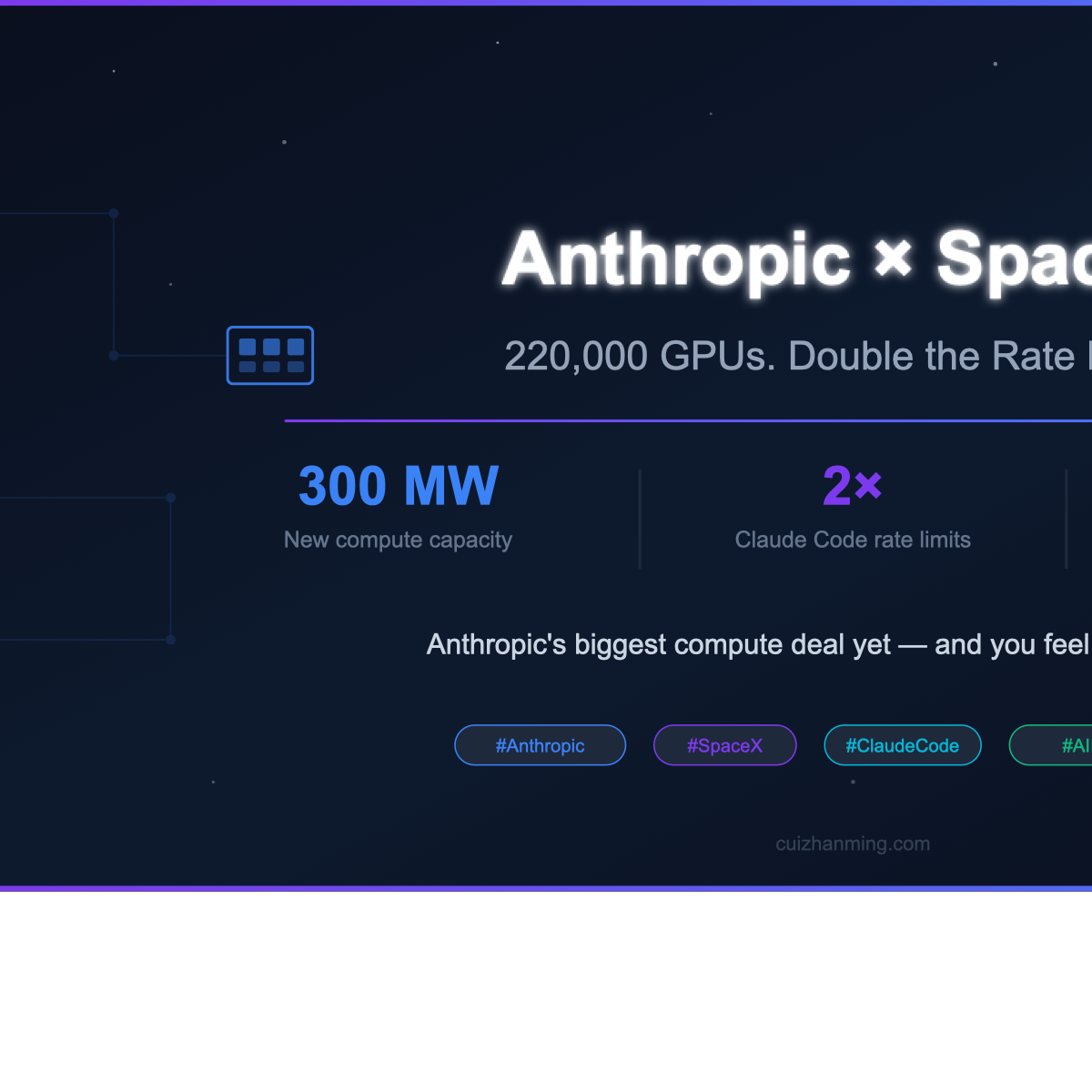
Anthropic just signed a deal with SpaceX to take over the entire Colossus 1 data center — 300+ megawatts, 220,000+ NVIDIA GPUs — and they’re using the extra headroom to immediately double Claude Code’s rate limits.
This is a big one.
What Actually Changed Today
Three concrete changes, effective immediately:
1. Claude Code rate limits doubled. The five-hour limit for Pro, Max, Team, and seat-based Enterprise plans is now twice what it was. If you hit the wall regularly during long coding sessions, that wall just moved.
2. Peak-hours throttling removed. Pro and Max subscribers no longer get their Claude Code limits cut during high-traffic periods. Consistent performance across the day.
3. Claude Opus API rate limits raised substantially. If you’re building on the API with Opus models, the new limits are significantly higher. The full table is on Anthropic’s platform docs.
These changes came through because Anthropic now has the capacity to back them up. The SpaceX deal alone brings more than 300 megawatts online within the month.
The Colossus Deal
Colossus 1 is a SpaceX-operated supercomputing facility — notable for scale and density. Anthropic gets access to the entire thing: over 220,000 NVIDIA GPUs and 300+ megawatts of power capacity. That capacity starts flowing within 30 days.
This joins a growing list of supply-side moves:
- Amazon: up to 5 GW agreement, nearly 1 GW coming by end of 2026
- Google + Broadcom: 5 GW agreement, online from 2027
- Microsoft + NVIDIA: $30 billion in Azure capacity
- Fluidstack: $50 billion in US AI infrastructure
The pattern here is deliberate diversification. Anthropic runs on AWS Trainium, Google TPUs, and NVIDIA GPUs — multiple hardware stacks, multiple cloud partners, now multiple data center operators. There’s also an orbital angle: Anthropic has expressed interest in partnering with SpaceX on multiple gigawatts of orbital AI compute. That one’s speculative for now, but it signals how far out this infrastructure thinking goes.
Why This Matters for Enterprise Users
The rate limit increases are useful for individual developers, but the more interesting subplot is the international expansion. Enterprise customers in regulated industries — finance, healthcare, government — need in-region infrastructure for data residency. Some of the new capacity is explicitly earmarked for this. The Amazon deal includes inference nodes in Asia and Europe.
Anthropic is also being deliberate about where they build: they’re partnering specifically with democratic countries with stable supply chains for hardware, networking, and facilities. That’s a policy statement as much as a procurement strategy.
On the cost side: Anthropic has committed to covering any consumer electricity price increases caused by their US data centers, and they’re exploring ways to extend that to new jurisdictions as international capacity comes online.
The Bigger Picture
The rate limit changes are the immediate practical win. But the underlying story is Anthropic building toward a compute position that matches their model ambitions. Every capacity announcement this year has been in the hundreds of millions to billions of dollars. The Colossus deal adds another large block of GPU time in the near term.
For Claude Code users, doubled limits and no more peak-hour degradation means longer uninterrupted work sessions. For API builders on Opus, the higher rate limits open up use cases that were previously rate-constrained.
The orbital compute thing is worth keeping an eye on. It’s not a near-term product, but it’s the kind of thinking that shows where Anthropic’s infrastructure ambitions top out.
Source: Anthropic announcement
 Anthropic Goes Into the Services Business: A New Enterprise AI Company with Blackstone, Goldman Sachs, and H&F
Click to load Disqus comments